Understand Nylon Yarn Specification

Nylon yarn plays a crucial role in the textile industry. Its strength, elasticity, and durability make it a preferred choice for many applications. Understanding the specifications of nylon yarn is essential for manufacturers and brands aiming to produce high-quality textiles. This article provides a detailed analysis of nylon yarn specifications, helping you make informed decisions in your production process.
Nylon Yarn Specification
Nylon yarn specifications cover various aspects such as denier, filament count, tensile strength, and elongation. These factors determine the yarn's performance and suitability for different textile products.
Denier measures the yarn's thickness. It is the weight in grams of 9,000 meters of yarn. A lower denier means finer yarn, suitable for lightweight fabrics. Higher denier yarns are thicker and used for heavy-duty textiles.
Filament count refers to the number of individual fibers twisted together. More filaments usually mean a smoother and stronger yarn.
Tensile strength indicates how much force the yarn can withstand before breaking. This is critical for applications requiring durability.
Elongation measures how much the yarn can stretch before breaking. Nylon's high elongation makes it ideal for stretchable fabrics.
Manufacturers must select the right combination of these specifications based on the end product's requirements. For example, sportswear demands high elongation and moderate denier, while industrial fabrics require high tensile strength and thicker yarn.
Material Composition and Production Process
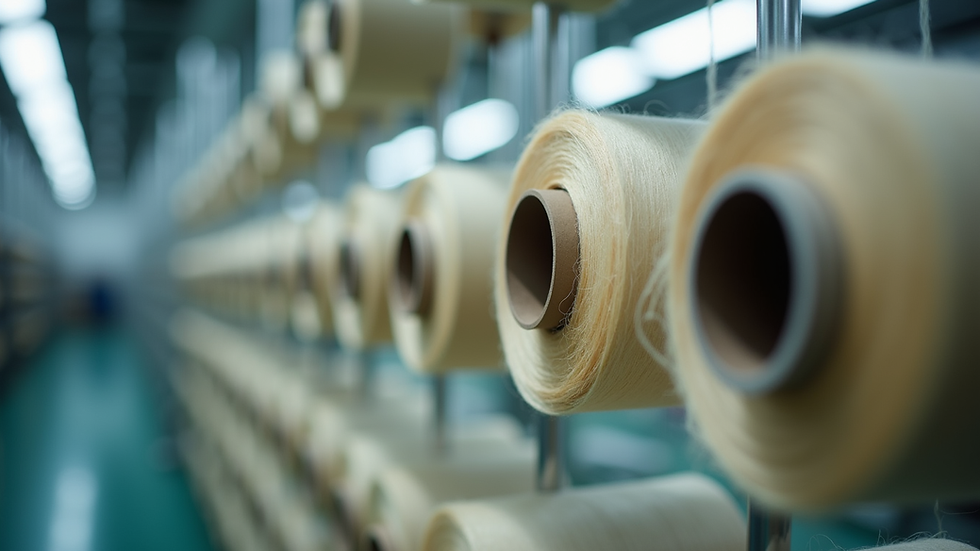
Nylon yarn is a synthetic fiber made from polyamide polymers. The production process involves polymerization, spinning, drawing, and texturizing.
Polymerization creates long chains of molecules forming the base material.
Spinning converts the polymer into filaments by extruding it through spinnerets.
Drawing aligns the molecular chains to increase strength.
Texturizing adds bulk and elasticity by creating crimps or loops in the yarn.
Each step affects the final yarn properties. For instance, the drawing ratio influences tensile strength and elongation. Texturizing methods determine the yarn's feel and appearance.
Understanding these processes helps in customizing nylon yarn to meet specific technical demands. For example, a higher drawing ratio produces stronger yarn for industrial use, while texturized yarn suits apparel requiring softness and stretch.
Cons?
Despite its advantages, nylon yarn has some limitations that manufacturers should consider.
Moisture absorption: Nylon absorbs more water than polyester, which can affect drying time and fabric weight.
UV sensitivity: Prolonged exposure to sunlight can degrade nylon, reducing its strength and colorfastness.
Heat sensitivity: Nylon melts at relatively low temperatures, limiting its use in high-heat applications.
Cost: Nylon production can be more expensive compared to other synthetic fibers.
These drawbacks require careful selection of nylon yarn types and treatments. For example, UV stabilizers can improve sunlight resistance. Blending nylon with other fibers can reduce moisture issues.
Applications and Industry Standards
Nylon yarn finds use in diverse sectors such as apparel, industrial textiles, automotive, and home furnishings. Each application demands specific yarn characteristics.
Apparel: Lightweight, soft, and elastic yarns are preferred for sportswear and lingerie.
Industrial textiles: High tensile strength and abrasion resistance are critical for ropes, conveyor belts, and safety gear.
Automotive: Nylon yarns are used in airbags, seat belts, and tire cords, requiring strict quality standards.
Home furnishings: Durable and colorfast yarns are essential for carpets and upholstery.
Industry standards like ASTM and ISO provide guidelines for testing nylon yarn properties. Compliance ensures product reliability and market acceptance.
Future Trends in Nylon Yarn Production
Innovation drives the nylon yarn market forward. Key trends include:
Sustainable production: Recycling and bio-based nylon reduce environmental impact.
Enhanced performance: Nanotechnology and advanced coatings improve strength, UV resistance, and moisture management.
Customization: Digital spinning and smart textiles enable tailored yarn properties for niche markets.
Manufacturers investing in these technologies can meet evolving global demands and maintain competitive advantage.
For a comprehensive understanding of nylon yarn specifications, exploring detailed technical data and supplier capabilities is recommended. This knowledge supports strategic decisions in product development and market expansion.
Comments